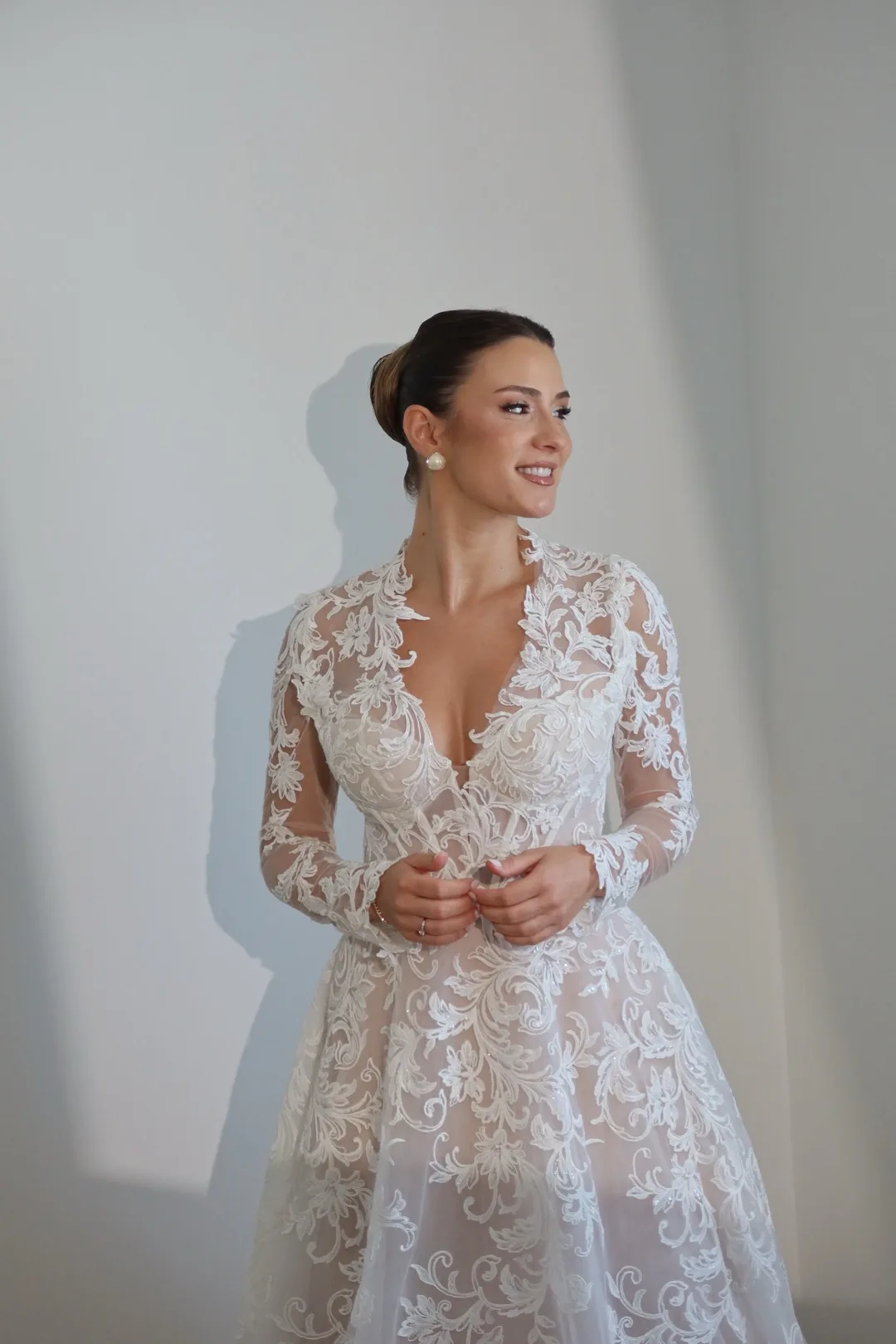
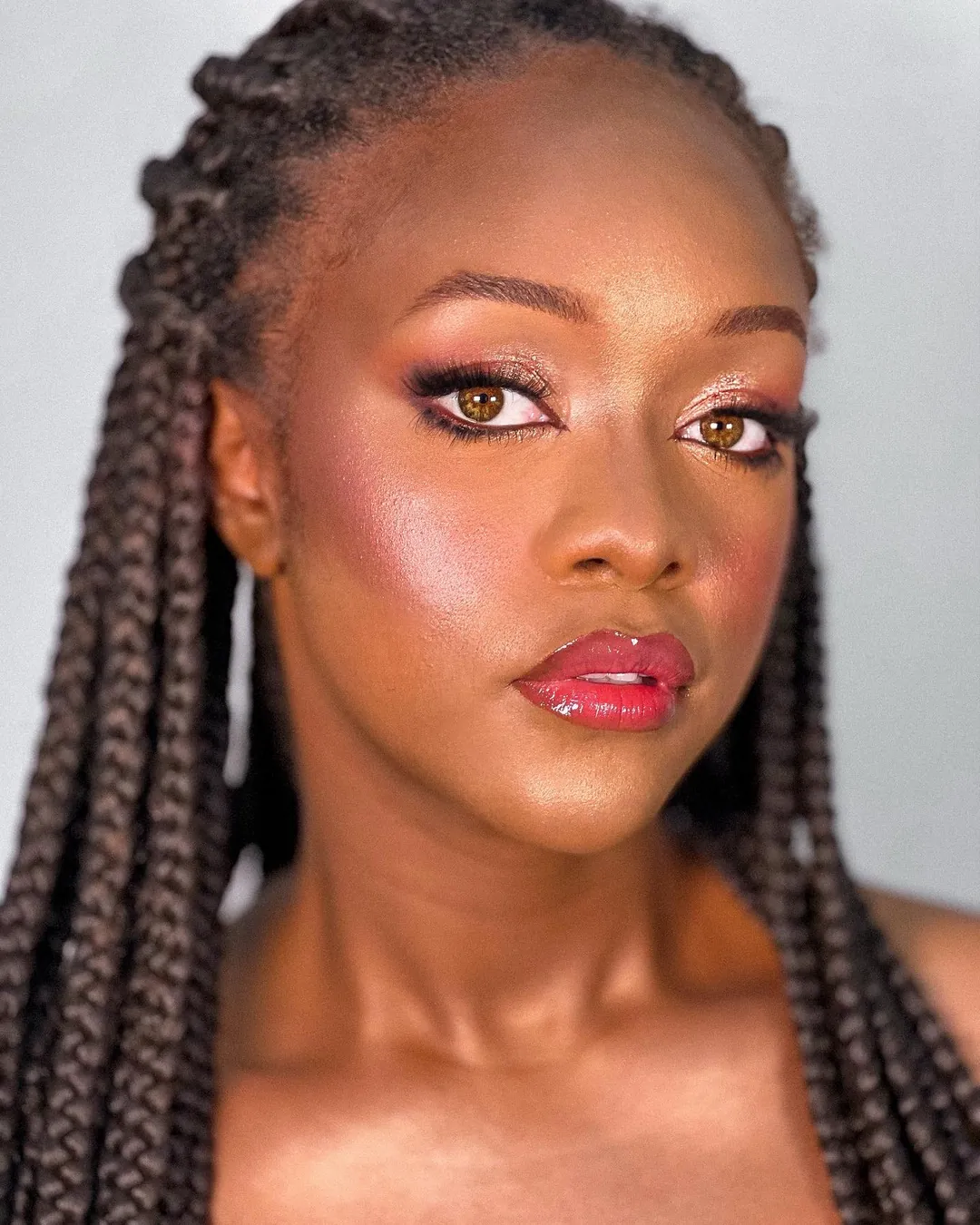
Há uma diferença entre estar maquilhada e estar maquilhada para casar. A primeira dura uma noite. A segunda tem de aguentar a igreja, o calor da tarde, o choro da sua mãe, quatrocentas fotografias e a última música da festa, e continuar a parecer-se consigo.
Trabalho com noivas desde o primeiro ano de profissão. Foi por elas que percebi que a técnica sozinha não chega: é preciso perceber a pessoa, o vestido, a luz do sítio e a hora a que tudo acontece. É esse conjunto que decide como a maquilhagem é construída.
Tudo começa com uma prova, semanas antes
A prova não é um ensaio decorativo. É onde faço o trabalho difícil, com tempo e sem relógio: percebo como a sua pele se comporta, testo tons contra a cor real do vestido, desenho o olhar e vejo o que a fotografia devolve.
Peço sempre que traga referências: as que adora e, sobretudo, as que detesta. Saber o que não quer poupa-nos mais tempo do que saber o que quer. Se já tiver escolhido acessórios de cabelo, brincos ou véu, traga-os também: metal dourado e metal prateado pedem subtons diferentes na pele.
No fim da prova ficamos com uma decisão tomada e escrita. No dia do casamento não se improvisa nada: repete-se algo que já sabemos que resulta.
Pele blindada: o que isso quer dizer na prática
A técnica brasileira de pele blindada tem má fama por causa de quem a faz mal. Bem feita, não é uma máscara: é o oposto. São camadas muito finas, cada uma fixada antes da seguinte, em vez de uma camada espessa de produto que assenta nas linhas e escorrega com o suor.
A preparação é metade do resultado. Antes de qualquer base há limpeza, hidratação escolhida para o seu tipo de pele e tempo de espera: sim, tempo parado, a deixar o produto assentar. É a parte mais aborrecida do processo e é a que decide se a maquilhagem ainda está lá às duas da manhã.
Depois trabalho por zonas: o que precisa de mais cobertura recebe mais, o que não precisa fica leve. Uma noiva com pele bonita na maçã do rosto não precisa de base na maçã do rosto. Cobrir tudo por igual é o erro mais comum e o que mais envelhece.
O dia: horários e ordem
O dia do casamento tem uma coreografia. Combinamos com antecedência a que horas começo, quem entra primeiro e quanto tempo tenho, e depois cumpro-o, porque cada atraso meu é um atraso na igreja.
Normalmente as madrinhas e a mãe da noiva são maquilhadas antes, para que a noiva fique para o fim e chegue ao momento da fotografia com a maquilhagem no seu melhor. A sua maquilhagem demora à volta de noventa minutos. Reservo sempre uma margem no fim para retoques depois do vestido estar posto, porque vestir um vestido de noiva não é uma operação delicada.
O que a câmara vê e os olhos não
Fotografia de casamento é feita com flash, luz de janela, luz de igreja e luz de festa. Quatro temperaturas de cor diferentes no mesmo dia. Produtos com determinados filtros solares devolvem um brilho branco no flash que ninguém vê ao vivo. Um pó demasiado claro na zona dos olhos faz o mesmo.
É por isso que testo sempre a prova com fotografia. O que interessa não é como fica no espelho do estúdio: é como fica nas imagens que vai ver durante o resto da vida.
Deslocação, madrinhas e o resto do grupo
Desloco-me ao local onde se está a preparar, seja em casa, num hotel ou na própria quinta. Baseada no Porto, mas desloco-me para onde o seu dia acontecer. Em Portugal ou no estrangeiro. É só uma questão de combinarmos com antecedência.
Se houver madrinhas, mãe da noiva ou convidadas para maquilhar, diga-me quantas são quando falarmos: isso muda a hora a que tenho de começar e, muitas vezes, se levo alguém comigo.
Falar comigo
Diga-me a data, o local e mais ou menos o que tem em mente. Respondo normalmente no próprio dia e digo-lhe tudo (o que está incluído, quanto tempo demora, o que é preciso decidir e quando), sem qualquer compromisso.
No dia do casamento não se improvisa nada. Repete-se aquilo que já se sabe que resulta: foi exatamente para isso que existiu a prova.
Larissa Wendler, maquilhadora de noivas no Porto
Referências
- Regulamento (CE), n.º 1223/2009: regime europeu dos produtos cosméticos: composição, rotulagem e avaliação de segurança de tudo o que se aplica na pele.
- INFARMED: autoridade nacional competente para produtos cosméticos em Portugal.
There is a difference between wearing makeup and wearing makeup to get married in. The first lasts an evening. The second has to survive the church, the afternoon heat, your mother crying, four hundred photographs and the last song of the night, and still look like you.
I have worked with brides since my first year in the profession. They are the reason I learned that technique alone is not enough: you have to understand the person, the dress, the light of the venue and the hour everything happens. That combination is what decides how the makeup gets built.
It starts with a trial, weeks before
The trial is not a decorative rehearsal. It is where the hard work happens, unhurried: I learn how your skin behaves, test shades against the real colour of the dress, design the eye, and see what photography gives back.
I always ask you to bring references: the ones you love and, above all, the ones you hate. Knowing what you don't want saves us more time than knowing what you do. If you have already chosen hair accessories, earrings or a veil, bring those too: gold and silver ask for different undertones in the skin.
We leave the trial with a decision made and written down. Nothing is improvised on the wedding day: we repeat something we already know works.
Sealed skin: what that actually means
The Brazilian sealed-skin technique has a bad reputation because of people who do it badly. Done well it is not a mask: it is the opposite. Very thin layers, each one set before the next, instead of one thick coat of product that settles into lines and slides off with perspiration.
Preparation is half the result. Before any foundation there is cleansing, hydration chosen for your skin type, and waiting time. Yes, sitting still, letting the product settle. It is the most boring part of the process and it is the part that decides whether the makeup is still there at two in the morning.
Then I work zone by zone: what needs more coverage gets more, what doesn't stays light. A bride with beautiful skin across her cheek does not need foundation across her cheek. Covering everything equally is the most common mistake and the one that ages a face fastest.
The day: timings and order
A wedding day has a choreography. We agree in advance what time I start, who goes first and how long I have, and then I keep to it, because every minute I am late is a minute late at the church.
Bridesmaids and the mother of the bride are usually done first, so the bride is last and reaches the photographs with her makeup at its best. Your makeup takes around ninety minutes. I always keep a margin at the end for touch-ups once the dress is on, because getting into a wedding dress is not a delicate operation.
What the camera sees and the eye does not
Wedding photography happens under flash, window light, church light and party light. Four different colour temperatures in one day. Products with certain sunscreen filters throw back a white cast under flash that nobody sees in person. Powder that is too light around the eyes does the same.
That is why I always photograph the trial. What matters is not how it looks in the studio mirror: it is how it looks in the images you will be looking at for the rest of your life.
Travel, bridesmaids and the rest of the group
I come to wherever you are getting ready: at home, in a hotel, or at the venue itself. I am based in Porto but I travel to wherever your day happens: in Portugal or abroad. It is simply a matter of arranging it in advance.
If there are bridesmaids, family or guests to make up, tell me how many when we speak: it changes what time I have to start and often whether I bring an assistant.
Talking to me
Tell me the date, the venue and roughly what you have in mind. I usually reply the same day and walk you through everything (what is included, how long it takes, what needs deciding and when), with no obligation.
Nothing is improvised on the wedding day. We repeat what we already know works: that is exactly what the trial was for.
Larissa Wendler, bridal makeup artist in Porto
References
- Regulation (EC) No 1223/2009: the European regime for cosmetic products: composition, labelling and safety assessment of everything applied to the skin.
- INFARMED: the national competent authority for cosmetic products in Portugal.