
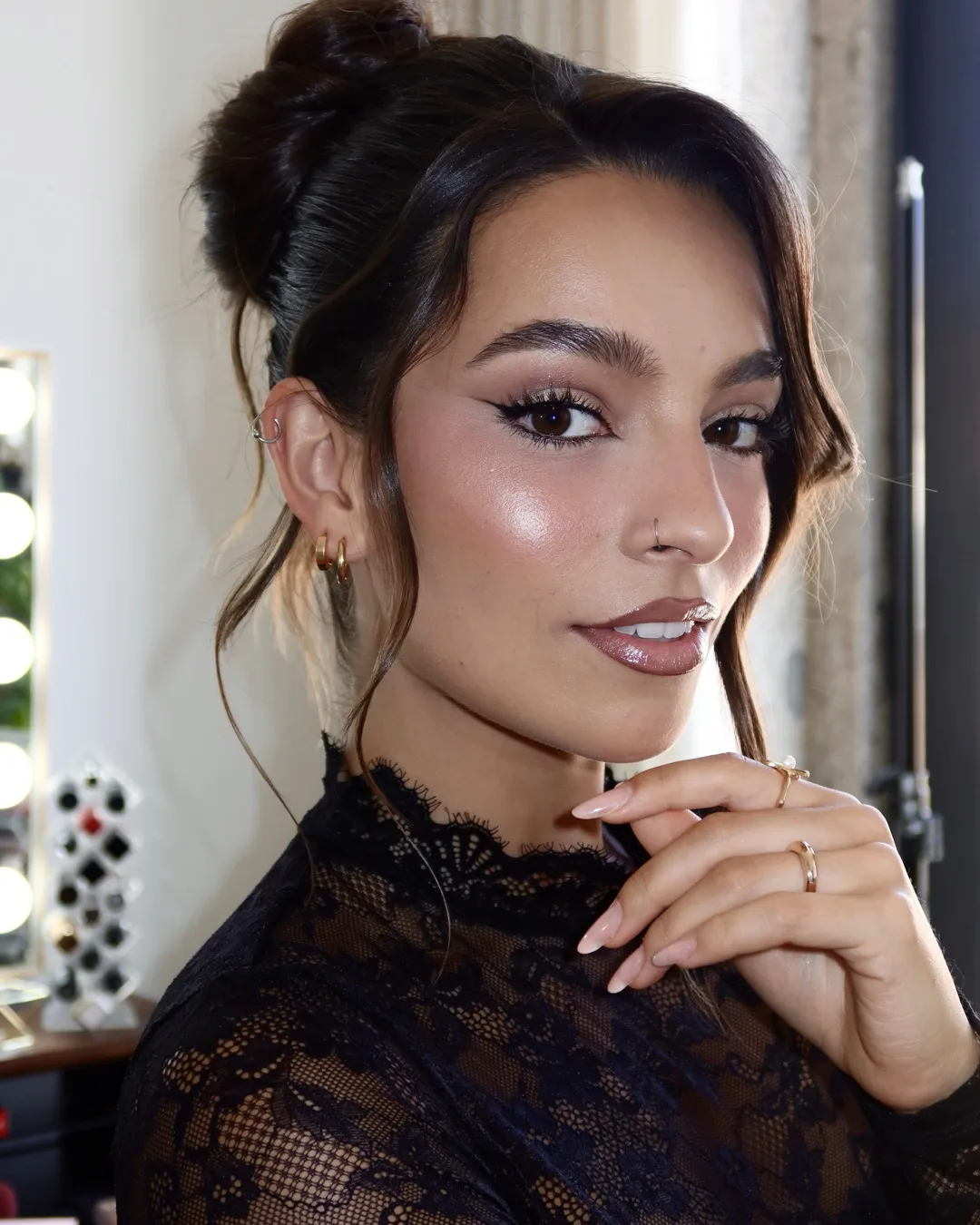
Why skin prep decides the result
Plenty of people believe the final result comes down to the quality of the foundation, or to how it was applied. Anyone who does this for a living knows most of it was decided earlier. Well-prepared skin holds the base better, stops product from collecting in the lines, and finishes closer to skin than to makeup. It is where I start every job as a makeup artist in Porto, whether it is a bride or a dinner.
In my online makeup course this stage gets taught in detail and in practice, with the techniques I use in the studio every week.
| Element of prep | Why it matters to the makeup |
|---|---|
| Cleansing the skin | Removes oil, dirt and residue |
| Working the texture of the skin | Helps the base grip |
| Application technique | Decides the final finish |
| Tools (brush or sponge) | Change the coverage and the result |
Skin that has not been properly prepared can undo the whole thing. Even with good products, the makeup can go patchy, sit heavy, or vanish over the course of a few hours.
Prep has several jobs:
- Create an even surface for the base to sit on
- Make the makeup last longer
- Keep the finish natural and luminous
- Stop product collecting in expression lines
- Let the skin and the makeup read as one surface
Good makeup starts before the makeup. That is why this stage is one of the most important parts of any professional makeup course.
Cleansing the skin properly before makeup
Why cleanse first
Cleansing is the first step of any prep that works. Over a day, skin collects:
- its own oil
- residue from pollution
- leftover cosmetic product
- dead cells
Apply makeup over that layer and the result is compromised.
Clean skin lets the base grip, and it stops the product from mixing with what is already there, which is what causes patches, uneven texture and makeup that gives up early.
How to do it
Before starting the makeup, a simple sequence:
1. Cleanse with a product suited to the skin type
2. Take off residue with cotton or micellar water
3. Make sure the skin is completely dry before the base goes on
That gives you a far better surface to work on.
Techniques that make makeup last
The question I get most from people learning is how to make makeup last longer. The answer almost always starts in the prep.
Some of what I do:
- work the texture of the skin properly before the base
- use the right tool for the application
- apply the base in a controlled, progressive way
- work the skin and the product into one another
That avoids the usual problems:
- base disappearing over the day
- heavy texture
- product collecting in expression lines
- the product separating on the skin
When the skin is prepared properly, the makeup can hold for many hours. My bridal work is built for fourteen.
Brush or sponge for the base
The tool changes the finish directly. In my online course I explain the decision in practice, so each person can find what works for them.
Applying with a brush
A brush gives you:
- more coverage
- a faster application
- better control over how much product goes on
I reach for it often in professional work, mostly when the coverage needs structure.
Applying with a sponge
A sponge gives you:
- a more natural finish
- better blending into the skin
- a lighter, more luminous effect
Which is why it gets used so much in self-makeup, or whenever the result should look like less.
Which is better?
There is no single answer, and anyone who gives you one is selling something. The choice depends on:
- the skin type
- the type of base
- the finish you want
- the experience of whoever is applying it
In the course these techniques are demonstrated step by step.
Applying the base like a professional
Application is one of the stages that most affects the final result. Even with good prep, the technique makes the difference.
A few basics:
- start with a small amount of product
- build in thin layers
- work the base properly into the skin
- keep it even across the whole face
The common mistake is putting too much base on right at the start. That is what creates a heavy, artificial effect.
I would rather build coverage gradually. It costs a couple of extra minutes and it is the difference between makeup that looks like skin and makeup that looks like makeup.
Common mistakes in skin prep
People who have worn makeup for years still get this stage wrong. The most frequent ones:
- applying base without cleansing first
- using the wrong tools
- using too much product
- not working the base into the skin properly
What that produces:
- uneven texture
- makeup that doesn't last
- an artificial look
Learning the right techniques avoids all of it, and lifts the quality of the makeup considerably.
Who this is for
This knowledge is not reserved for professional makeup artists. Anyone can benefit from learning to prepare skin properly.
It is especially useful for:
- people who want to learn to do their own makeup
- beginners starting makeup from zero
- people already working in beauty
- anyone who wants a better result than they are currently getting
These techniques are what make results consistent instead of accidental.
Learning professional makeup with Larissa Wendler
My online makeup course was built to teach the techniques I actually use, not a theory of them. The point is to make learning simple and to let anyone build real skill.
In the course you learn:
- professional skin prep
- base application techniques
- self-makeup, step by step
- the techniques professionals work with
- the fundamentals that everything else rests on
Every lesson is meant to be practical, clear, and usable the same day.
Conclusion
Skin prep is the real secret of professional makeup. Whatever products you use, prepared skin grips better, lasts longer and finishes closer to natural.
Get cleansing, application and the choice of tool right and the result changes completely.
If you want to learn professional makeup, self-makeup, or the techniques makeup artists work with, start with the skin.
The course was built by Larissa Wendler, makeup artist and visagist in Porto, to teach the methods that are really used in this work and to help each person build technique and the confidence to trust it.
Makeup doesn't last because of setting spray. It lasts because of what was done to the skin before the base ever touched it. For bridal makeup, this preparation starts days before, and it is what helps the skin hold up through heat and tears.
>
Larissa Wendler, makeup artist and visagist in Porto
References
- Regulation (EC) No 1223/2009: the European regime for cosmetic products, covering composition, labelling and the safety assessment of everything applied to skin.
- INFARMED: the national competent authority for cosmetic products in Portugal.